
Choosing the best air fryer can feel overwhelming. With dozens of models, sizes, technologies, and brands on the market, it’s easy to get lost in technical terms and marketing promises. Yet, the right air fryer can genuinely transform the way you cook—making meals faster, healthier, and more convenient without sacrificing flavor or texture.
Air fryers have evolved far beyond simple countertop gadgets. Today, they come with smart programs, dual baskets, advanced temperature controls, and even hybrid features that combine air frying with baking, roasting, dehydrating, or grilling. Understanding what really matters—and what doesn’t—is the key to making a confident decision.
This guide was created to help you do exactly that. By the end of this article, you’ll understand how air fryers work, how models differ, which features are actually useful, and how to choose the best option for your cooking style and household needs. If you want to make a smart, long-term choice that fits your lifestyle, keep exploring the details below.
What an Air Fryer Really Is and How It Works
An air fryer is essentially a compact convection oven designed to cook food using rapid hot air circulation. A heating element combined with a powerful fan distributes hot air evenly around the food, creating a crispy exterior while keeping the inside tender. This process mimics deep frying, but with little to no oil.
The key advantage lies in efficiency. Because air fryers are smaller than traditional ovens, they heat up faster and cook food more quickly. This makes them ideal for everyday meals, snacks, and even full recipes when time and convenience matter.
Another important point is control. Most air fryers allow precise temperature adjustments and timed cooking, giving you consistent results. Unlike pan frying or oven baking, air frying reduces guesswork and minimizes mess, which is one of the reasons these appliances have become so popular.
Why Air Fryers Have Become So Popular
Air fryers address several modern cooking needs at once. People want healthier meals without giving up texture or flavor, and air fryers deliver on that promise by using minimal oil. For many users, this translates into lower calorie intake and less grease in everyday cooking.
Convenience is another major factor. Air fryers are easy to use, quick to clean, and versatile enough to handle a wide range of foods—from frozen snacks to fresh vegetables, meats, and even baked goods. They also reduce reliance on stovetops and ovens, especially in small kitchens.
Finally, consistency plays a big role. Once you learn how your air fryer performs, results become predictable. This reliability encourages people to cook more at home, experiment with recipes, and streamline meal preparation.
Understanding Air Fryer Sizes and Capacities
One of the first decisions you’ll face is choosing the right size. Air fryer capacity is usually measured in liters or quarts and directly affects how much food you can cook at once.
Small air fryers are ideal for individuals or couples. They take up less counter space, consume less energy, and heat very quickly. However, they can feel limiting if you cook multiple portions or host guests often.
Medium-sized models are the most versatile. They comfortably handle meals for two to four people and strike a good balance between capacity and countertop footprint. For many households, this category offers the best overall value.
Large air fryers are designed for families or frequent batch cooking. Some models feature dual baskets or extra-wide drawers, allowing you to cook multiple foods at the same time. While they require more space, they significantly reduce cooking time when preparing larger meals.
Basket-Style vs. Oven-Style Air Fryers
Air fryers generally fall into two main categories: basket-style and oven-style. Each has distinct advantages depending on how you plan to use the appliance.
Basket-style air fryers are the most common. They feature a pull-out drawer with a perforated basket inside. These models are straightforward, efficient, and excellent for foods like fries, chicken wings, vegetables, and breaded items. Shaking or flipping food halfway through cooking helps ensure even crisping.
Oven-style air fryers resemble small countertop ovens with shelves or trays. They offer greater flexibility, allowing you to cook larger items like pizzas, whole chickens, or multiple dishes at once. Many oven-style models also include rotisserie functions and dehydration settings.
If simplicity and speed matter most, basket-style models are usually the better choice. If versatility and capacity are your priorities, oven-style air fryers may be worth the extra space and investment.
Single Basket vs. Dual Basket Models
Dual basket air fryers have become increasingly popular. These models allow you to cook two different foods at the same time, often with independent temperature and time controls for each basket.
This feature is especially useful if you prepare complete meals in one appliance. For example, you can cook protein in one basket and vegetables in the other without mixing flavors or cooking requirements.
Single basket models, on the other hand, are usually more affordable and compact. They work well for users who cook one main dish at a time or prefer a simpler interface.
The decision comes down to cooking habits. If multitasking in the kitchen is important to you, dual baskets can significantly improve efficiency. If not, a high-quality single basket model is often more than enough.
Temperature Range and Cooking Control
Temperature control plays a crucial role in air fryer performance. Most models operate between approximately 175°F and 400°F (80°C to 200°C). This range covers most air frying needs, from gentle reheating to high-heat crisping.
More advanced models offer precise digital temperature adjustments, while basic models rely on manual dials. Digital controls provide greater accuracy and consistency, which can make a noticeable difference for certain recipes.
Some air fryers also include pre-programmed cooking modes. These presets can be helpful for beginners, but they are not essential. What matters most is the ability to manually adjust temperature and time once you become familiar with your appliance.
Power and Cooking Performance
Air fryer power is measured in watts and typically ranges from around 1,200 to 2,000 watts. Higher wattage generally means faster heating and stronger air circulation, which can improve crisping and reduce cooking time.
However, more power doesn’t automatically mean better results. Design, airflow efficiency, and basket shape also influence performance. A well-designed air fryer with moderate wattage can outperform a poorly designed high-wattage model.
It’s best to look for a balance between power and efficiency. Models that heat quickly, maintain stable temperatures, and circulate air evenly tend to deliver the best overall cooking experience.
Materials and Build Quality
The materials used in an air fryer affect durability, safety, and ease of cleaning. Most baskets and trays feature nonstick coatings, which help prevent food from sticking and simplify cleanup.
High-quality nonstick surfaces are durable and resistant to peeling when properly cared for. Cheaper coatings may wear out faster, so paying attention to build quality can save money in the long run.
Exterior materials also matter. Heat-resistant plastics and solid construction improve safety and longevity. A sturdy air fryer feels stable on the counter and holds up well to frequent use.
Ease of Cleaning and Maintenance
Cleaning convenience is often underestimated but becomes extremely important with regular use. Removable baskets, dishwasher-safe components, and smooth interior surfaces make a big difference.
Basket-style air fryers are usually easier to clean than oven-style models, which may have multiple trays and interior surfaces. However, oven-style models often compensate with removable racks and drip trays.
Choosing a model with simple disassembly and minimal crevices can significantly reduce cleanup time and make everyday cooking more enjoyable.
Noise Levels and Kitchen Comfort
Air fryers use powerful fans, which naturally produce some noise. While most models operate at an acceptable level, noise sensitivity varies from person to person.
If your kitchen is small or open-plan, quieter operation may be more important. Higher-end models often feature improved airflow design that reduces noise without sacrificing performance.
Although noise shouldn’t be the main deciding factor, it’s worth considering if you plan to use the air fryer frequently or during quiet hours.
Smart Features and Connectivity
Some modern air fryers include smart features such as app control, recipe integration, and remote monitoring. These features can be convenient, especially for tech-savvy users.
However, smart connectivity is not essential for good cooking results. Many people find that traditional controls are faster and more intuitive for daily use.
If smart features align with your lifestyle, they can add value. Otherwise, focusing on core cooking performance usually leads to greater satisfaction.
Popular Air Fryer Brands and What They Offer
Different brands focus on different strengths. Some emphasize innovation and advanced technology, while others prioritize affordability and simplicity.
Premium brands often invest in airflow design, temperature accuracy, and long-term durability. Their models tend to last longer and offer more consistent results.
Mid-range brands provide solid performance with fewer extras, making them ideal for most households. Budget brands focus on basic functionality and lower prices, which can be appealing for first-time buyers or occasional use.
Choosing a brand with a strong reputation for quality and customer support can make ownership more enjoyable and reduce long-term issues.
Matching an Air Fryer to Your Cooking Style
Your personal cooking habits should guide your decision. If you cook simple meals and snacks, a compact basket-style air fryer may be perfect. If you enjoy experimenting with recipes, baking, or cooking for multiple people, a larger or oven-style model may suit you better.
Think about how often you’ll use the air fryer and for what types of food. A model that aligns with your routine is far more valuable than one packed with features you’ll never use.
Considering lifestyle factors such as kitchen space, time constraints, and dietary goals helps ensure that your air fryer becomes a trusted tool rather than an unused appliance.
Advanced Cooking Functions You Should Understand Before Buying
As air fryers evolved, manufacturers began adding multifunctional capabilities that go far beyond basic frying. Understanding these functions helps you avoid paying for features you’ll never use while recognizing the ones that genuinely add value.
Many modern air fryers include baking modes that allow you to prepare cakes, muffins, breads, and even small loaves. While they won’t replace a full-sized oven for large batches, they work extremely well for quick baking and small portions. The controlled airflow helps achieve even browning, especially when the temperature is properly adjusted.
Roasting is another important function. Vegetables, poultry, and meats roast exceptionally well in air fryers due to the intense heat circulation. This feature is especially useful for people who enjoy meal prepping or cooking proteins in advance without drying them out.
Dehydration functions are becoming more common, particularly in mid-range and premium models. This setting uses low temperatures over longer periods to dry fruits, vegetables, and herbs. While not essential, it can be a valuable bonus for users interested in homemade snacks or food preservation.
Some air fryers also include grill or sear modes designed to create a caramelized exterior on meats. These modes typically use higher temperatures and optimized airflow patterns to simulate grilling effects indoors.
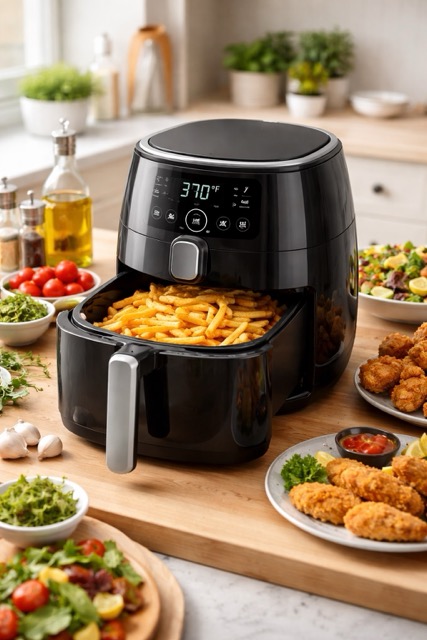
How Airflow Design Impacts Cooking Results
Airflow is one of the most overlooked yet critical factors when choosing an air fryer. Even with high wattage and advanced controls, poor airflow design can lead to uneven cooking.
Well-designed air fryers circulate hot air evenly around the food from multiple angles. This ensures consistent browning and eliminates the need for excessive flipping or shaking. Models with optimized airflow often deliver better results even at lower power levels.
Basket shape also plays a role. Rounded baskets tend to promote smoother air circulation, while sharp corners can create dead zones where food cooks unevenly. Some manufacturers design baskets with raised ridges or perforated plates that enhance airflow beneath the food.
Understanding airflow helps explain why two air fryers with similar specifications can perform very differently in real-world cooking.
Manual Controls vs. Digital Interfaces
The choice between manual and digital controls often comes down to preference rather than performance, but each option has advantages worth considering.
Manual air fryers use knobs to adjust temperature and time. They are intuitive, reliable, and less prone to technical issues. These models are especially appealing to users who value simplicity and durability over precision.
Digital air fryers offer touchscreens, presets, and precise temperature adjustments. They allow finer control and often include memory functions that save your favorite settings. While they rely on electronic components, high-quality digital interfaces are generally reliable and user-friendly.
For beginners, digital presets can reduce the learning curve. For experienced cooks, manual controls may feel faster and more responsive. Neither option is inherently better—it depends on how you like to interact with your appliances.
The Role of Accessories and Expandability
Accessories can significantly expand what you can do with an air fryer. Some models include baking pans, grill plates, skewers, racks, or rotating baskets, especially in oven-style designs.
Stackable racks allow you to cook multiple layers of food simultaneously, increasing capacity without upgrading to a larger unit. This is particularly useful for dehydrating or cooking snacks in batches.
Specialty accessories like pizza pans or cake molds can transform an air fryer into a compact baking station. However, it’s important to consider compatibility. Not all accessories fit all models, so choosing a brand with readily available add-ons can be a smart move.
While accessories are not mandatory, they can dramatically increase versatility for users who enjoy experimenting in the kitchen.
Energy Efficiency and Long-Term Operating Costs
Air fryers are generally considered energy-efficient appliances, but efficiency varies between models. Smaller air fryers consume less electricity per use but may require multiple batches for larger meals. Larger models consume more power but can cook more food at once.
Efficiency also depends on how often you use the appliance. For people who replace oven cooking with air frying regularly, energy savings can be noticeable over time. Faster cooking times and reduced preheating contribute to lower overall energy consumption.
Choosing an air fryer that aligns with your household size and cooking frequency helps optimize both convenience and long-term costs.
Safety Features That Matter in Daily Use
Safety is a crucial but often overlooked consideration. Most modern air fryers include automatic shutoff mechanisms that activate when the basket is removed or if the unit overheats.
Cool-touch handles and insulated exteriors reduce the risk of burns, especially in households with children. Non-slip feet help keep the appliance stable during operation.
Some models also feature audible alerts or visual indicators that signal when cooking is complete or when the basket is improperly inserted. These small details contribute to a safer and more user-friendly experience.
Durability, Warranty, and After-Sales Support
An air fryer is an investment, and durability plays a key role in long-term satisfaction. Higher-quality models typically use thicker materials, more reliable heating elements, and better fan systems.
Warranty coverage varies by brand and model. Longer warranties often reflect greater confidence in product quality. However, warranty terms are only useful if the manufacturer provides accessible customer support.
Before choosing a model, it’s worth considering how easy it is to obtain replacement parts such as baskets or trays. Brands that support long-term maintenance tend to offer better overall value.
Noise, Heat Output, and Kitchen Environment
Air fryers generate heat and noise, which can affect kitchen comfort. While most models are quieter than traditional exhaust fans, fan noise is unavoidable.
Some air fryers direct heat exhaust upward or backward, which can warm surrounding surfaces. This is rarely an issue but can matter in compact kitchens or under low cabinets.
Premium models often manage heat and airflow more efficiently, resulting in quieter operation and less external heat. If you plan to use your air fryer daily, these factors can influence satisfaction more than you expect.
Choosing Based on Lifestyle and Cooking Frequency
Your lifestyle should be the final filter in the decision-making process. Someone who cooks occasionally may prioritize affordability and compact size. Someone who cooks daily may benefit more from durability, capacity, and advanced controls.
Busy households often value speed and multitasking features, such as dual baskets or synchronized cooking programs. People focused on healthy eating may prefer models that excel at vegetables, lean proteins, and oil-free cooking.
There is no universal “best” air fryer—only the best one for how you actually cook.
How Air Fryers Fit Into Modern Kitchen Trends
Air fryers align well with modern kitchen trends that emphasize efficiency, minimalism, and multifunctionality. As living spaces become smaller and schedules busier, appliances that perform multiple tasks efficiently are increasingly valued.
Many people use air fryers as their primary cooking appliance during the week, reserving ovens and stovetops for weekends or special occasions. This shift highlights how air fryers are becoming central tools rather than secondary gadgets.
Their popularity also reflects broader changes in eating habits, with more people cooking at home, experimenting with recipes, and seeking balance between convenience and nutrition.
The Learning Curve and Skill Development
Although air fryers are user-friendly, mastering them takes some experimentation. Different foods require different temperatures, timings, and techniques.
Over time, users develop an intuitive sense of how their air fryer behaves. This familiarity leads to better results and encourages creativity. What starts as a simple appliance often becomes a versatile cooking companion.
Understanding this learning curve helps set realistic expectations and prevents disappointment during the initial adjustment period.
Future Trends in Air Fryer Technology
Air fryer technology continues to evolve. Manufacturers are focusing on improved airflow efficiency, quieter operation, and more sustainable materials.
Smart integration is also expanding, with better app experiences and adaptive cooking programs. While these innovations are not essential today, they point toward a future where air fryers become even more intuitive and personalized.
Choosing a model with solid fundamentals ensures that it remains useful even as trends change.
Common Mistakes When Choosing an Air Fryer
One common mistake is buying a model that’s too small. While compact air fryers save space, they can become frustrating if you frequently need to cook in batches.
Another mistake is focusing solely on price. Very cheap models may lack durability, consistent heating, or effective nonstick coatings. Investing slightly more often leads to better performance and longevity.
Ignoring ease of cleaning is also a frequent oversight. An air fryer that’s difficult to clean may discourage regular use, reducing its overall value.
How to Get the Best Results From Any Air Fryer
No matter which model you choose, technique matters. Avoid overcrowding the basket, as proper airflow is essential for crisping. Shaking or flipping food halfway through cooking helps achieve even results.
Using a light coating of oil can improve texture without compromising health benefits. Preheating the air fryer, when recommended, also enhances consistency.
Over time, experimenting with temperatures and cooking times will help you understand how your air fryer performs, allowing you to fine-tune recipes and maximize results.
Conclusion
Choosing the best air fryer is less about finding the “perfect” model and more about finding the right fit for your needs. By understanding how air fryers work, recognizing key features, and evaluating your cooking habits, you can make a confident, informed decision.
A well-chosen air fryer can simplify meal preparation, support healthier eating habits, and bring more flexibility to your kitchen routine. With the insights from this guide, you’re well equipped to select a model that delivers value, performance, and enjoyment for years to come.
Frequently Asked Questions
Is an air fryer healthier than a traditional oven?
Air fryers are not necessarily healthier than ovens, but they often encourage lower oil usage and faster cooking, which can help reduce excess fat in certain recipes.
Can an air fryer replace a microwave or oven?
An air fryer can replace a microwave or oven for many tasks, but not all. It excels at crisping and reheating but may not fully replace large-scale baking or slow cooking.
Do air fryers consume a lot of electricity?
Air fryers are generally energy-efficient because they cook quickly and heat a small space. In many cases, they use less energy than a conventional oven.
How long does an air fryer usually last?
With proper care, a good-quality air fryer can last several years. Durability depends on build quality, frequency of use, and maintenance.
Is a dual basket air fryer worth it?
Dual basket air fryers are worth it for people who frequently cook complete meals or multiple dishes at once. For simpler cooking needs, a single basket model is often sufficient.