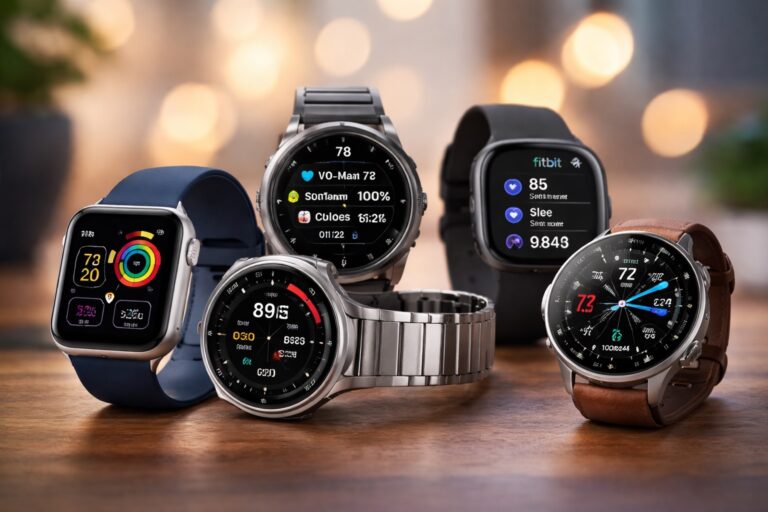
Choosing the best smartwatch today can feel overwhelming. There are dozens of models, hundreds of features, and endless opinions online. Some watches focus on fitness, others on productivity, and many try to do everything at once. The truth is simple: the “best” smartwatch is the one that fits your lifestyle, your phone, and your daily habits—not necessarily the most expensive or the most popular.
Smartwatches have evolved far beyond step counting. They now track sleep quality, heart health, stress levels, workouts, payments, navigation, and even safety features. At the same time, battery life, screen size, comfort, and software experience can vary dramatically between models that look similar at first glance. That’s why choosing without a clear framework often leads to regret.
This guide was designed to remove that confusion. Below, you’ll learn exactly how to evaluate a smartwatch, what features truly matter, and how the leading models compare in real-world use. By the end, you’ll be able to confidently identify which smartwatch aligns best with your needs and expectations.
What Really Defines a “Good” Smartwatch
Before looking at models, it’s essential to understand what actually makes a smartwatch good in daily life.
A great smartwatch should:
- Work seamlessly with your smartphone
- Provide useful information at a glance
- Feel comfortable enough to wear all day and night
- Offer battery life that matches your routine
- Deliver accurate health and fitness tracking
- Stay intuitive without constant learning curves
If a watch excels in one area but fails in another you care about, it may not be the right choice for you.
Step 1: Smartphone Compatibility (The Most Important Rule)
This is non-negotiable.
- If you use an iPhone, your experience will be best with an Apple Watch. While other brands may connect, they won’t offer the same depth of integration.
- If you use an Android phone, Wear OS watches (Samsung, Pixel, OnePlus) or fitness-focused brands like Garmin and Amazfit are better choices.
- Cross-platform watches (Garmin, Amazfit, Fitbit) work on both systems but may limit replies, apps, or voice assistants.
Choosing a watch that doesn’t fully support your phone is the fastest way to disappointment.
Step 2: Define Your Main Use Case
Ask yourself honestly: Why do I want a smartwatch?
Everyday Convenience
- Notifications
- Calls and quick replies
- Music control
- Payments
- Navigation
Health & Wellness
- Heart rate monitoring
- Sleep tracking
- Stress management
- Recovery insights
- Body metrics trends
Fitness & Training
- GPS tracking
- Workout modes
- Training load
- Performance analytics
- Recovery guidance
Outdoor & Adventure
- Rugged design
- Water resistance
- Long battery life
- Offline maps
- Altimeter and compass
Your primary goal should guide every decision afterward.
Step 3: Battery Life (Daily Charging vs Long Endurance)
Battery life is one of the biggest differentiators between smartwatch families.
Short Battery Life (1–2 days)
Pros:
- Brighter screens
- Faster processors
- Rich app ecosystems
Cons:
- Frequent charging
- Less ideal for sleep tracking if you forget to charge
Best for:
- Users who charge daily like a phone
- Heavy app and notification users
Long Battery Life (5–14+ days)
Pros:
- Less charging stress
- Better for continuous health tracking
- Ideal for travel and outdoor use
Cons:
- Fewer apps
- Less animated interfaces
Best for:
- Fitness-focused users
- People who value reliability over apps
Step 4: Display Type and Readability
Most modern smartwatches use AMOLED or OLED displays, but how they behave matters.
Key considerations:
- Always-on display support
- Outdoor visibility
- Screen size vs wrist size
- Touch responsiveness
Larger displays improve readability but can feel bulky on smaller wrists.
Step 5: Health Tracking Capabilities
Not all health tracking is equal.
Basic Health Tracking
- Heart rate
- Step counting
- Sleep duration
Advanced Health Insights
- Sleep stages
- Stress tracking
- Recovery scores
- Body temperature trends
- Blood oxygen levels
If health is your priority, consistency and long-term trends matter more than flashy metrics.
Step 6: Fitness and Sports Features
This is where watches differ dramatically.
Casual Fitness Users
- Pre-set workout modes
- Auto-detection
- Simple summaries
Serious Athletes
- GPS accuracy
- Training load
- VO₂ max estimates
- Recovery recommendations
- Custom workouts
A watch built for athletes often sacrifices apps for precision and endurance.
Step 7: Comfort, Size, and Materials
A smartwatch is only useful if you wear it.
Pay attention to:
- Case size (40–46mm range matters)
- Thickness
- Weight
- Strap material
- Skin sensitivity
Heavier watches can feel premium but may be uncomfortable during sleep or long workouts.
Step 8: LTE and Standalone Features
Some smartwatches can function independently from your phone.
LTE is useful if:
- You run or walk without your phone
- You want emergency connectivity
- You need calls and messages anywhere
LTE downsides:
- Monthly fee
- Higher battery drain
- Higher initial cost
Comparison Table: Leading Smartwatch Categories
| Category | Best For | Trade-Off |
|---|---|---|
| Full Smartwatch Ecosystem | Apps, notifications, productivity | Short battery life |
| Fitness-Focused Smartwatch | Health and performance tracking | Fewer apps |
| Hybrid Smartwatch | Balance of features and battery | Less depth in both areas |
| Rugged Smartwatch | Outdoor and adventure | Larger size |
Detailed Breakdown of Major Smartwatch Families
Apple Watch Family
Best for users deeply integrated into the Apple ecosystem.
Strengths:
- Seamless iPhone integration
- Best notification handling
- Smooth user experience
- Strong health features
Limitations:
- Short battery life
- Only works fully with iPhone
Best for:
- iPhone users who value convenience and polish
Samsung Galaxy Watch Series
A strong Android counterpart with deep system integration.
Strengths:
- Excellent displays
- Strong health ecosystem
- Good balance of apps and fitness
Limitations:
- Battery life varies
- Best experience on Samsung phones
Best for:
- Android users wanting a modern smartwatch feel
Google Pixel Watch
Focused on clean design and simplicity.
Strengths:
- Minimalist interface
- Smooth animations
- Strong wellness insights
Limitations:
- Battery life
- Smaller size may not suit everyone
Best for:
- Android users who prefer simplicity
Garmin Smartwatches
Built for performance and endurance.
Strengths:
- Exceptional battery life
- Advanced fitness analytics
- Reliable GPS
Limitations:
- Less app variety
- More complex interface
Best for:
- Runners, cyclists, and serious athletes
Fitbit Watches
Wellness-first approach.
Strengths:
- Clear health metrics
- Easy-to-read insights
- Good battery life
Limitations:
- Limited smart features
- Some features require subscription
Best for:
- Users focused on health habits
Amazfit and Value-Oriented Watches
Strong features for the price.
Strengths:
- Long battery life
- Lightweight designs
- Affordable
Limitations:
- Less refined software
- Fewer integrations
Best for:
- Budget-conscious users who want essentials done well
How to Choose Based on Your Profile
- Busy professional → Strong notifications + payments
- Fitness enthusiast → GPS + training metrics
- Health-focused user → Sleep + stress tracking
- Traveler → Long battery + offline features
- Minimalist → Simplicity and comfort
Advanced Smartwatch Features Most Buyers Overlook
Many people focus only on the headline features, but some of the most valuable smartwatch capabilities are hidden deeper in the system. These details often define long-term satisfaction.
Software Updates and Longevity
A smartwatch is not just hardware; it’s a software product.
Important questions to ask:
- How often does the brand release updates?
- Do updates bring new features or just bug fixes?
- How many years does the watch receive support?
Watches with longer software support stay useful for years, while poorly supported models can feel outdated quickly—even if the hardware is still fine.
Ecosystem Lock-In (Good or Bad?)
Some watches are deeply tied to an ecosystem.
Pros:
- Seamless syncing
- Better automation
- Smarter suggestions
Cons:
- Harder to switch platforms
- Limited cross-device flexibility
If you plan to keep the same phone brand long-term, ecosystem lock-in can actually improve your experience.
Smartwatch Sensors Explained (What They Actually Do)
Not all sensors deliver the same value for every user.
Heart Rate Sensors
- Measure beats per minute
- Detect resting heart rate trends
- Support workout intensity zones
What matters most is consistency, not just raw accuracy.
Sleep Tracking Sensors
- Detect sleep stages
- Measure sleep duration
- Analyze sleep regularity
Sleep insights are most useful when combined with long battery life, since frequent charging interrupts tracking.
Stress and Recovery Metrics
These often combine:
- Heart rate variability
- Resting heart rate
- Activity levels
They help users understand when to push harder and when to rest.
GPS and Motion Sensors
Critical for:
- Running
- Cycling
- Hiking
- Outdoor workouts
Higher-end watches usually offer more precise GPS tracking and better data smoothing.
User Interface and Navigation: Small Details, Big Impact
A smartwatch interface should feel effortless.
Key aspects:
- Gesture controls
- Button placement
- Menu depth
- Customization options
Some watches prioritize minimalism, while others offer deep customization. Neither is better—only more suitable for different personalities.
Notifications: The Real Daily Value
Notifications are often the most-used feature.
Good notification handling includes:
- Clear previews
- Easy dismissal
- Smart grouping
- Custom filtering
If notifications feel overwhelming or hard to manage, the watch becomes distracting instead of helpful.
Customization and Watch Faces
Personalization matters more than people admit.
Look for:
- Multiple watch face styles
- Custom complications
- Adjustable layouts
- Third-party faces
A watch that visually fits your style is more likely to stay on your wrist.
Voice Assistants and Smart Controls
Voice features can be incredibly useful—or completely ignored.
They are best for:
- Quick reminders
- Timers
- Simple questions
- Hands-free actions
If voice recognition isn’t reliable, this feature quickly loses value.
Payments and Digital Wallets
Contactless payments are one of the most practical smartwatch features.
Benefits:
- No phone needed
- Fast transactions
- Secure authentication
This is especially valuable for commuting, travel, and workouts.
Smartwatch Durability and Build Quality
A smartwatch should handle real life.
Consider:
- Water resistance
- Scratch-resistant glass
- Case materials
- Strap durability
Rugged models often sacrifice elegance, while premium designs may require more care.
Fitness Watch vs Smartwatch: The Real Difference
This is a critical distinction many buyers miss.
Fitness Watches
- Focus on performance
- Offer detailed training data
- Prioritize battery life
- Use simpler interfaces
Smartwatches
- Focus on connectivity
- Offer apps and notifications
- Prioritize screen quality
- Require frequent charging
Hybrid models try to balance both, but always lean slightly toward one side.
Battery Management and Charging Habits
Battery life is not just capacity—it’s behavior.
Things that drain battery faster:
- Always-on display
- LTE usage
- Continuous GPS
- Frequent notifications
If you’re willing to adjust settings, you can often double real-world battery life.
Health Insights vs Raw Data
Raw data alone is overwhelming.
The best watches:
- Translate metrics into insights
- Offer actionable suggestions
- Track trends instead of single values
Clarity beats complexity for long-term engagement.
Choosing the Right Size for Your Wrist
Size affects comfort more than specs.
General guidance:
- Smaller wrists → lighter, thinner cases
- Larger wrists → bigger screens, longer battery
A watch that feels too heavy or bulky will eventually end up in a drawer.
Smartwatch for Work, Fitness, and Sleep
Ideally, one watch covers all three—but not always.
Work:
- Notifications
- Calendar
- Calls
Fitness:
- Tracking accuracy
- Comfort during movement
Sleep:
- Lightweight design
- Long battery life
Some users prefer one watch for everything; others use separate devices.
Privacy and Data Control
Health data is sensitive.
Look for:
- Clear privacy policies
- Data export options
- Control over cloud syncing
Transparency builds trust and long-term comfort.
Who Should Choose Each Type of Smartwatch
Choose a Full Smartwatch if You:
- Want rich notifications
- Use apps frequently
- Don’t mind charging often
Choose a Fitness Watch if You:
- Train regularly
- Care about recovery
- Want long battery life
Choose a Hybrid Watch if You:
- Want balance
- Prefer subtle designs
- Value simplicity
Future-Proofing Your Purchase
To make your smartwatch last:
- Choose models with strong update history
- Avoid niche ecosystems unless you love them
- Prioritize battery and comfort
Trends change, fundamentals don’t.
Psychology of Smartwatch Use
The best smartwatch:
- Encourages better habits
- Reduces phone dependence
- Feels supportive, not demanding
If a watch adds stress instead of reducing it, it’s not the right one.
Final Buying Checklist
Before buying, confirm:
- Phone compatibility
- Battery expectations
- Primary use case
- Comfort and size
- Software support
- Health vs smart balance
If a watch checks these boxes, it’s likely a good match.
Common Mistakes When Buying a Smartwatch
- Choosing based on brand only
- Ignoring battery needs
- Overpaying for features you won’t use
- Buying the wrong size
- Forgetting phone compatibility
The Role of Ecosystem Integration in Daily Use
One of the most underestimated factors when choosing a smartwatch is how well it integrates with your digital ecosystem.
A smartwatch is not an isolated device—it works as an extension of your phone, apps, and daily routines. If everything connects smoothly, the experience feels effortless. Notifications sync instantly, reminders appear at the right time, and data flows seamlessly between devices.
On the other hand, poor integration creates friction. Delayed notifications, limited app compatibility, or missing features can quickly become frustrating.
Choosing a smartwatch that fits naturally into your ecosystem ensures that technology works for you—not against you.
Real-World Battery Expectations vs Marketing Claims
Battery life advertised by manufacturers often differs from real-world usage.
Many brands base their claims on ideal conditions, such as minimal notifications and limited feature usage. In reality, your habits—like frequent notifications, GPS tracking, or always-on display—can significantly reduce battery life.
For example:
Heavy users may experience 20–40% less battery life than advertised
Fitness tracking with GPS can drain battery much faster
LTE usage can cut battery life dramatically
Understanding this helps set realistic expectations and prevents disappointment after purchase.
The Importance of Charging Convenience
Battery life isn’t just about duration—it’s also about how easy it is to recharge.
Some smartwatches use proprietary chargers, which means you need to carry a specific cable. Others support fast charging, allowing you to gain hours of usage in just a few minutes.
Convenient charging matters especially for:
Travelers
Busy professionals
Users who track sleep and need quick top-ups
A watch that fits easily into your charging routine feels much more practical in daily life.
Smartwatch Notifications vs Smartphone Dependency
A smartwatch should reduce your dependence on your phone—not increase it.
The goal is to filter information, not duplicate it. The best smartwatches allow you to:
Customize which notifications appear
Silence non-essential alerts
Quickly respond or dismiss messages
When used correctly, a smartwatch minimizes distractions and helps you stay focused. When used poorly, it can become another source of constant interruptions.
Fitness Motivation and Behavioral Impact
One of the most powerful aspects of a smartwatch is its ability to influence behavior.
Simple features like step goals, reminders to move, and activity rings can encourage healthier habits. Over time, these small nudges can lead to meaningful lifestyle improvements.
However, the effectiveness depends on how the watch presents information. Clear, simple feedback tends to work better than complex metrics.
A smartwatch should motivate—not overwhelm—you.
Sleep Tracking: Useful or Overrated?
Sleep tracking has become a standard feature, but its value depends on how it’s used.
Basic sleep tracking shows duration and general patterns. Advanced systems analyze sleep stages, recovery, and consistency.
What matters most is:
Long-term trends
Consistency of data
Actionable insights
A single night’s data is less important than patterns over weeks or months. The best watches help you understand habits rather than just display numbers.
The Balance Between Simplicity and Features
More features don’t always mean a better experience.
Some smartwatches try to include everything—apps, fitness tracking, payments, voice assistants—but end up feeling cluttered. Others focus on simplicity, offering fewer features but a smoother experience.
The key is balance.
If you enjoy exploring features and customization, a full smartwatch may suit you. If you prefer a clean, distraction-free experience, a simpler model might be better.
The Impact of Build Materials on Daily Comfort
Materials affect more than just appearance—they influence comfort, durability, and long-term satisfaction.
Common materials include:
Aluminum (lightweight and affordable)
Stainless steel (premium and durable)
Titanium (lightweight and strong, often more expensive)
Glass types also vary in scratch resistance and durability.
If you wear your watch daily, comfort and durability become more important than aesthetics alone.
Water Resistance and Real-Life Usage
Most smartwatches offer some level of water resistance, but not all are designed for the same activities.
Basic water resistance is suitable for:
Hand washing
Rain
Sweat
Higher ratings allow for:
Swimming
Water sports
Outdoor activities
Understanding your lifestyle helps determine how important this feature is.
Smartwatch for Travel and Daily Mobility
If you travel frequently, certain smartwatch features become more valuable.
These include:
Offline maps
Long battery life
Contactless payments
Time zone adjustments
A travel-friendly smartwatch reduces the need to constantly check your phone and keeps essential information accessible.
Data Synchronization Across Devices
Smartwatches often sync data across multiple platforms.
This includes:
Health data
Notifications
Calendar events
Fitness progress
Smooth synchronization ensures that your information is always up to date, whether you’re using your phone, tablet, or computer.
Poor synchronization, on the other hand, can create inconsistencies and reduce usability.
The Learning Curve: How Easy Is It to Use?
Ease of use is critical, especially for first-time smartwatch users.
Some watches are intuitive from the start, with simple menus and clear navigation. Others require time to learn due to deeper customization and features.
If you prefer a plug-and-play experience, choose a watch with a simpler interface. If you enjoy exploring settings and features, a more complex system may be rewarding.
Notifications Fatigue and How to Avoid It
Too many notifications can turn a helpful device into a distraction.
To avoid this:
Disable non-essential alerts
Prioritize important apps
Use “Do Not Disturb” modes when needed
A well-configured smartwatch should reduce noise and highlight what truly matters.
Smartwatch as a Long-Term Habit Tool
Beyond features, a smartwatch can become a long-term habit tool.
It can help you:
Stay active
Sleep better
Manage time more effectively
Stay connected without constant phone use
Over time, these small improvements can lead to significant lifestyle changes.
Emotional Value and Personal Connection
A smartwatch is a personal device—you wear it every day.
This creates a connection beyond functionality. The design, interface, and overall experience influence how much you enjoy using it.
A watch that feels right for you is more likely to stay part of your routine.
When a Smartwatch Is Not Necessary
Not everyone needs a smartwatch.
If you:
Rarely check notifications
Don’t track health or fitness
Prefer minimal devices
A smartwatch may not add significant value.
Understanding your real needs prevents unnecessary spending.
Balancing Budget and Features
Budget plays a major role in decision-making.
Instead of choosing the most expensive model, focus on:
Features you will actually use
Comfort and design
Battery life
Compatibility
A mid-range smartwatch often delivers the best balance between price and functionality.
Making a Confident Final Decision
At the end of the day, the best smartwatch is the one that fits your life naturally.
When your choice aligns with your habits, goals, and preferences, the decision becomes simple. Instead of chasing trends or specifications, focus on what improves your daily experience.
With the right mindset and clear priorities, choosing a smartwatch stops being overwhelming—and becomes a smart, confident investment in your routine.
Conclusion
Choosing the best smartwatch isn’t about chasing specifications—it’s about alignment. The right watch should disappear into your routine while quietly improving it. Whether you prioritize health, fitness, convenience, or battery life, there is a model designed precisely for that purpose. When you focus on how you live rather than what’s trending, the best choice becomes surprisingly clear.
Frequently Asked Questions
1. Is a more expensive smartwatch always better?
No. Higher prices often reflect materials, branding, or niche features rather than practical value for every user.
2. Can I use a smartwatch without my phone nearby?
Yes, but only models with LTE or strong offline features support full independence.
3. How long should a smartwatch battery last ideally?
That depends on your tolerance. Daily chargers are fine for some; others prefer weekly charging.
4. Are fitness watches good for everyday use?
Yes, especially if you value health insights and battery life over apps.
5. Should I prioritize health or smart features?
Choose based on what improves your daily life. Health features help long-term habits; smart features help short-term convenience.